
 The future of schools: flat pack
Last week’s comments by Toby Young and Michael Gove about the future of school design and the performance of architects has caused much controversy.
Firstly I would like to state that I am no fan of Toby Young and his particularly direct approach to communication. Neither am I a fan of the current free schools movement in that they seem to be adopted by middle class parents and will do little to improve the imbalance of life chances for young people in the
Toby Young accused the architectural profession of designing expensive schools and also being arrogant in their belief that school environments did not affect learning. I totally support the fact that the schools we designed under the previous Government were far too expensive. However, to blame architects for this is unfair. The architects involved in these schools designed buildings which they were asked to design and at an average cost of £2100 per m2 the Government was happy to pay.
The waste in this process was very much down to the process from the beginning to the end. In 2002 we completed a new build high school in Northumberland. We managed a turn key solution including furniture and all IT for £900 per m2 . This was a quick design competition with a design and build contract. The school was
Toby Young also accused architects of being arrogant in their belief that school environments made a difference to learning. I have no doubt that the quality of the environment does make a difference to a student’s ability to learn, if it is only the fact that someone has shown faith by investing in quality facilities. However, the level of this investment is significant in relation to the potential improvement.
Where architects are arrogant is in their belief that they know better than educationalists in relation to what is right for young people. I have seen so many architects challenge educationalists who have been in the teaching profession for many years and suggest their thinking is wrong. This is where architects are arrogant in that they genuinely believe that they have the answers.
Where we as a profession fail is in the listening to the market. The past Government was keen to spend lots of money on one off schools. This suited the architectural profession very well and we all were rewarded for our efforts. However, now the market is saying that they want low cost buildings which are standardised. If Toby Young wants cheap schools and cheap buildings we should be looking for ways to provide it rather than fighting against his request. At the end of the day Toby Young is the client and he is the person who signs the cheques.
We should embrace Michael Gove’s view of standardisation and look to learn from Tesco, IKEA and Dixons as to how we can commoditise buildings.
Architects are so often focused on the art of architecture, which I would always support, and is important and has its place. However in the current market place we need to find ways of innovating to resolve the commercial challenges we face.
I would far rather see our energy being put into innovation across the whole industry where we work together to solve the financial challenges rather than wasting our energy on telling our clients they are wrong. I do not believe a client can ever be wrong as they ultimately pay the bills. If architects do not like a particular client they have a choice to not work with them. Too many times over the years I have heard the expression from colleagues where they tell me that they need to educate the client. This is a classic arrogant statement in that architects believe that they should be educating everyone else around them into their thinking.
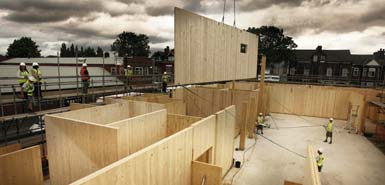
We should look to commoditise our buildings more to provide better service and performance at a much lower cost. We should be looking to deliver schools for below £1000 per m2 with exceptional energy performance and construction times of a matter of weeks.
I fear for the architectural profession as it takes on clients, ignoring the opportunity to innovate and bring intelligent solutions to the market.


