Tuesday, 31 August 2010

The New Homeless

It is becoming increasingly apparent to me that we have a generation of new homeless people – young people in their 20s and 30s.

Actually, homeless may be too strong a word for them, and more appropriate is ‘houseless’.

This generation are either finding it very difficult to raise the funds to buy a property or have seen the down side of taking large loans and do not wish to get a foot on the property ladder. They even have their own term – KIPPERS, or Kids in parents’ pockets.



"KIPPERS" - it doesn't just refer to a fish


I seem to come across an increasing number of young people who in this situation, still living at home with their parents and desperate to move into a place of their own. Many of these young people have not saved money because this has not been something that they felt they needed to do in the times of excess. Now they need deposits of 20-25% to get a mortgage and their ability to raise this level of cash is difficult.

At _space group we have quite a few of our team within this age bracket and I am aware of a significant number of our people who are still at home with their parents, some in relationships finding it difficult to build a future together. There are even some who are starting families and still remain in separate properties.


The "KIPPERS" are ready to leave home, but can't get on the property market

Because of the need for such a large deposit, the private rental market has become attractive to a lot of KIPPERS, even though the products on the market are not great. At one end you have low quality, bedsit-type accommodation, and at the other, expensive riverside apartments. It is the more pragmatic accommodation in the middle which we seem to be without.

I know some RSLs have identified this and are trying to feed the market, but they themselves are suffering from funding challenges. I know recently of an RSL that put such properties on the market and there were huge waiting lists from people wanting the opportunity to rent, so it is clear that the demand is out there.


At _space group, we have developed a low cost house for the social housing market within our _spacehus brand. This is within the affordable window and also has minimal running costs. We have achieved this through offsite manufacture, which has allowed us to give each hus the highest quality in airtightness and insulation.


We are currently working on producing a £99,000 house, with running costs of £10 per week. While our buildings have low energy credentials, there is something else driving the project that we think is very important – by keeping the running costs low, the money the homeowner saves can be put towards paying the mortgage.


Our plan on the £99,000 house is to work on a 15% deposit with an 85% mortgage.


We are hoping to find a funder who will work with us who will help a whole generation own a home.


These £99,000 houses would even be appropriate for market rent if we can buy land at a realistic price. In the meantime, watch this _space!


Rob.

Tuesday, 13 July 2010

Things Will Never Be The Same

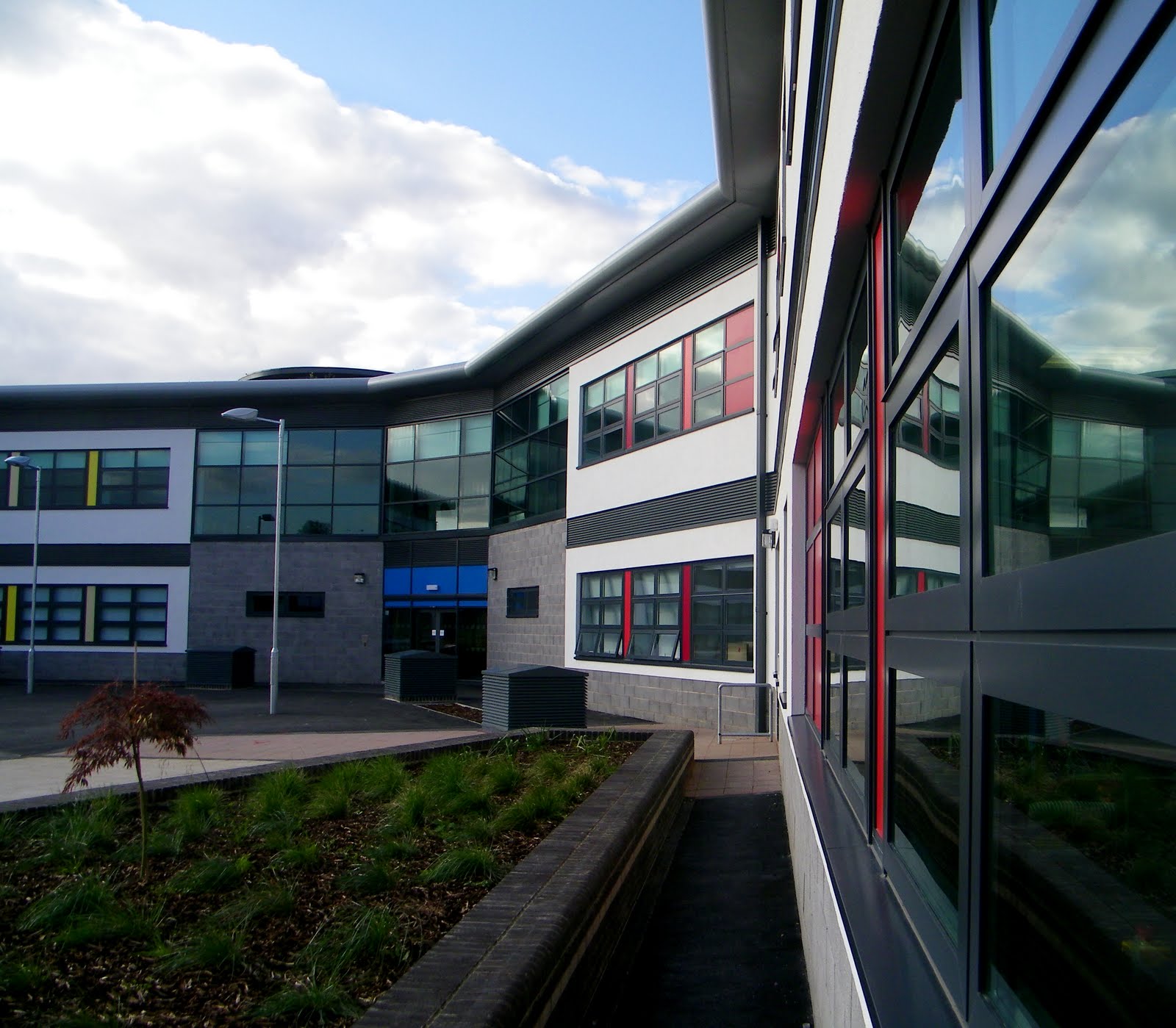
One of _space group's BSF schools, Washington School in Sunderland

July 5th 2010 is likely to be a milestone in the history of the construction industry. Michael Gove put an end to the Building Schools for the Future (BSF) programme, delivering one of the biggest blows to an industry in recent history. Without a doubt, thousands of construction jobs will be lost because of this announcement and the decision to halt spending on new schools.

One of my greatest surprises was the construction industry’s shock over the scale of the cuts. The coalition government began making noises some time ago that they were going to be aggressive in their review and early signs of Michael Gove’s subtlety were not particularly promising, so we had good time to prepare ourselves for the inevitable. Personally, I believe that it could have been considerably worse because live projects could have been scrapped.

Not only will this announcement affect the work available to our industry, Gove implied that we have all been wasteful and inefficient, and this is bound to have implications for those involved in construction in the future. Our industry responded to the game in town at the time and, for the past five years, many of us have been saying that BSF is wasteful and there must be a better way to deliver the programme.

I believe that the coalition have a window of around 12 to 18 months to sort out the country’s balance sheet, and then there will be an expectation that investment starts again in solving the problems of our schools estates, which are in poor condition due to a lack of capital investment since cuts made by Margaret Thatcher’s government. The education of our children is a very emotive subject and the idea of children being taught in crumbling buildings can be politically damaging for any government.

Michael Gove has appointed a committee to look at how we can deliver our capital spending programmes more efficiently. It is relevant that a director of property from Tesco is on this panel, as is the operations director from Dixons, as we are all aware of how aggressive retailers can be in driving down cots and forcing procurement approaches. I do believe there is some waste in our industry and there are better ways to do things, which could be signposted by this committee.

Technology plays a great part in improving efficiency, and working together, in a more integrated way, will help us to do this. _space group has been using Building Information Modelling for the past five years and this technology has helped us in this way, but encouraging the industry to take on this, and other technological changes, is a difficult sell and one that I think we must keep working on.

There is also opportunity for pre fabrication as a means of aiding school estate, but again this has not been embraced by many, with more traditional approaches being preferred.

As an industry, what we must do is accept where we are, and after we have all recovered from the shock and the impact these changes will have, we need to review our delivery approaches and invest in research to be able to offer increased efficiency in the future. When the new government do decide on the best ways to procure new schools, we should be proactively involved in the process and helping deliver more for less.

BSF RIP

Rob.


Wednesday, 7 July 2010

Thinking differently about housing

I have been disturbed by the number of people, particularly young people, who are unable to find a home of their own. To me, having a place of your own is one of the most important aspects of life, but finding an affordable home in the current market is very tough as land values still remain excessive and construction is expensive and wasteful, which sends the price of a new home soaring.

For the past two years, _space group has been working hard to develop a truly affordable home. We have been working with several organisations from around the world to piece together what we feel may help. This has resulted in the creation of our own affordable home – _spacehus.

Our _spacehus brings together Swedish timber technology, an Italian heating system and Japanese photovoltaics to create structures we believe can be both affordable and low energy. However, there is clearly a sustainability problem here in that, in order to reach our goals, we have scoured the globe for innovation and quality of product! Why? Because the levels of innovation and quality abroad are simply not found in the UK at present.

One of the things we hope _spacehus will do is help to encourage our manufacturers to embrace the opportunities to develop leading edge technology for low energy living. Not only that, but we hope that our timber structures will change the stigma the British attach to pre-fabs and timber framed housing brought on by the cheap construction methods used in the 1960s and 70s. In Northern Europe, thousands of homes are built with a timber base, and as we’re able to use some of the lessons local manufacturers and designers have learnt, we can ensure that our building is made of the highest quality materials, producing an airtight structure.

Although current Government cutbacks, which have affected the HCA to the tune of £230m, make the ways in which homes can be delivered uncertain, there continues to be a housing need and we are confident that a way to deliver affordable homes for those who need them will be found.

_space group has recently submitted Planning Approval for a prototype home on our site in Newcastle. We will be testing the performance criteria of all of the _spacehus systems, as well as using it to demonstrate the power of this idea. We plan to be delivering our first commercial homes at the beginning of 2011.

Watch this _space for more news on this exciting development!

Wednesday, 16 June 2010

iPad - My Verdict


Steve Jobs unveils his new iPad - but will it be a PC killer?

It’s nearly two weeks now since I walked out of the Apple Store with my new iPad, and when it comes to Apple’s latest baby, I find that most people fall into two categories:

1. Those who are Apple geeks, and therefore, love the iPad.

2. Those who think the iPad is a waste of money.

I have carried out a very scientific research project to understand where the truth lies. As _space have a reputation of ‘thinking differently’ and wanting to set the pace, I wanted to get my hands on an iPad to see what all the fuss was all about and to see whether it held any opportunities for our business.

I have been an iPhone user for some time and have become dependant upon several apps such as the grail and the digital clock.

Many people do say that the iPad is just a big iPhone. They are totally correct, however, I think this is the whole point of the device. With the iPhone, I found myself watching presentations or movies on the screen the size of a cigarette packet. Transporting this experience to the iPad is wonderful and makes surfing and watching video so much easier. I now take my iPad everywhere and find it convenient to quickly get access to websites and other information.

The iBook Store is really good and I have already finished my first book on it. I can see huge benefits, particularly on holiday where you end up using half your baggage allowance because of all of the books you have to trail with you. I have also subscribed to the new Times app as well as FT online. Both of these are fantastic and easy to operate. In due course, all magazines will go this way, creating a completely new industry.

I have been trying to get rid of my laptop, however as yet there are things which the iPad cannot do, so at the moment I am carrying two devices, which defeats the purpose of the iPad. Only time will tell if Apple’s newest creation can replace the PC, but at the moment I don’t think it is able to.

Many of the things it does do, such as being a book reader or a film viewer, laptops do not do as well, or with as much flair.

I think the iPad will only get better as more apps are developed and more publications are available.

Rob


Thursday, 3 June 2010

It's All Very Nice

Malmo, Sweden. Image from www.destination360.com

Last week I spent a few days in Sweden. We were in Scandinavia reviewing the manufacturing process for our timber building product. We were there for three days, which proved to be very interesting but also very exhausting.


We arrived into Copenhagen airport which is worth a visit in its own right. The building is very ordered, clean, crisp and welcoming, and gave us an excellent feeling of the Scandinavian way.


We then travelled by train through Malmo, up to the lakes where the factory is sited. As I travel around the UK a lot, I am a bit of a connoisseur of trains, and I felt this put anything Richard Branson had to offer to shame. All the trains were immaculate and very punctual, and the staff were incredibly courteous and very smart. My favourite aspect was the café / bar which was an open plan area where people on the train would gather, rather than the formal sitting down area provided in the UK.


On our first night, we stayed in a typically Scandinavian hotel, which was clean and crisp, yet minimal, in keeping with the town it was in. We had a fantastic meal and then visited a bar. As drinks worked out at over £6 a pint, we did not end up drunk that evening.


The following day’s breakfast was an interesting contrast to what I’ve experienced before. In comparison to the UK, everything moved at a much slower pace and seemed far more relaxed, and our hotel, I’m assured, was a typical Swedish business hotel. This helped to set us up for the day in a pleasant, relaxed manner.


We spent the remainder of the day visiting the factory and watching the skilled craftsmen putting together timber buildings. This is an incredible process where a team of around 35 operatives work on a line putting together a single house in a day. What was particularly fascinating was how they build the houses from the window out. The first window is placed on the flat bed, the gasket is added and the structure fitted around it. This is then pressed into place with a bench press, and then, panel by panel, the building is fabricated and stored. An articulated wagon then drives into the storage area and picks up the components in a dry environment ready for delivery. The quality of product is exceptional – not only are the finished panels of the highest standard, but all of the components utilised are too, with a noticeable difference being the quality of timber used, generated from the highest quality pine and larch from Sweden.


That evening, we visited our host’s own restaurant which was a wonderful experience in its own right. Never before have I had a restaurant opened only on my behalf, and my colleagues and I were served at our table by the Chef of this lakeside village restaurant.


The next day we made our way home through Copenhagen airport, and I have returned to the UK very impressed by the whole culture of Scandinavia in general, and Sweden in particular – the friendliness of the people, the beauty and efficiency of the area is admirable. However, I feel that this made me a bit too relaxed and I needed the tension which is so often apparent in our own wonderful country!

Rob

Thursday, 20 May 2010

Oh, what a night!

Rob and Diane at the Think Pink Ball


We held our annual North East ‘Think Pink’ Ball on Friday night, in aid of Children North East. This time, we took over the Gateshead Marriott and adorned their reception area and banqueting suite in _space pink and lime green.


It was a fantastic turn out, with over 220 guests all dressed in pink. There can’t have been much pink attire available in the North of England after the event!


We always to try and make the evening informal, with more of a party atmosphere than the average industry ball. Hopefully, we managed to achieve this and so far, we have had some really nice emails from people who attended, thanking us for a great evening. You never know if these thank you e-mails are from people being kind, but if my own experience of the night is anything to go by, I think people will have enjoyed themselves.


Whilst the Think Pink ball is a charity event, supported by the _space foundation, I am always conscious of not exploiting peoples’ generosity. However, we have been absolutely flabbergasted by the response we had on the night, as we have raised over £20,000 for Children North East. This was even more remarkable when you consider the timing of the night – on the same day, the announcement of a freezing of the BSF was made, putting everyone in a very pensive mood.


As is usually the case at these events, the evening rolled on in the bar into the early hours. I think we managed to call it a day at 4.00am which was far too late (or early, depending on how you look at it). There was a time when this would not have affected me but Saturday was definitely a challenge for me, with Sunday not much better. To make things even more challenging for me, on Saturday, I ended up going to a five year old’s birthday party, and as many of you will know, these are not renowned for being the most peaceful of events.


I have said on many occasions that it is events such as this where friends and colleagues come together to make all the hard work put into their jobs worthwhile. I am not one for Aston Martins or Ferraris, but give me a night out with friends anytime.


Rob.

Tuesday, 11 May 2010

Staying Positive

Uncertain times ahead at Westminster - image taken from www.thelondonsite.org.uk

These are undoubtedly unprecedented times, and if it was a football match it would be great to watch as a neutral. However, the political uncertainty facing the United Kingdom at present is clearly a concern.

We all know that there is a fear of the unknown, and never before has this been more apparent than it is at the moment for our country and the direction we’re heading in. In business, we undoubtedly face a period of change where public spending has to be reduced to give ‘UK plc’ a stronger balance sheet.

I really hope that this reduction is done sensibly to allow businesses and people to adjust in a planned manner. Out of all change there is opportunity and we have to keep our eyes open to see which way markets and opportunities will progress.

Over the past week, we have been somewhat treading water while a direction is agreed. One thing that we know for certain is that no one, including the political leaders, knows what our future may hold.


Rob.